By Emily Parker
Updated November 2026
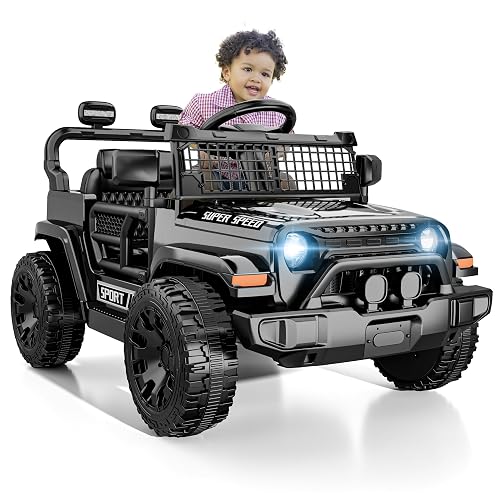
If you are weighing 6v vs 12v ride on toys, the short answer is this: 6-volt models suit smaller toddlers, flat ground and slower play, while 12-volt models handle bigger kids, grass, gravel and small hills. By the end of this guide you will know which voltage matches your child’s age, your terrain and your patience for charging.
Start With Your Child’s Age and Size
Voltage is mostly a question of how much power the toy needs to move a given weight. Most manufacturers pair 6-volt ride-ons with younger toddlers, often in the roughly 1 to 3 year range, and 12-volt ride-ons with kids closer to 3 to 6 years. Always check the listed weight limit on the box or in the manual, because that number matters more than the age printed on the packaging.
Watch for a kid who is already near the weight cap. A 6-volt motor working hard up a slope will drain its battery quickly and run hot, which shortens the motor’s life.
Compare Speed, Torque and Terrain
Speed is the feature most people look at first, but torque matters more once you leave the driveway. Here is how the two systems usually compare:
| Factor | 6V Ride-On | 12V Ride-On |
|---|---|---|
| Typical top speed | Walking pace to a brisk jog | Faster, suited to older kids |
| Best surface | Smooth pavement, hard floors | Grass, gravel, light inclines |
| Hill performance | Struggles on any real grade | Handles gentle slopes |
| Battery runtime | Generally shorter per charge | Generally longer per charge |
| Best fit | Younger toddlers, indoor or patio use | Older kids, yards and driveways |
If your yard has a steady slope or thick grass, a 6-volt toy will often stall. Owners frequently report that the motor simply cannot pull through soft turf, which is why many parents move up to 12 volts once the yard becomes the main play area. For a closer look at that step up, see 12V vs 24V Ride On Toys (2026): Which Is Better for Your Yard?.
Check Battery, Charging and Safety Details
Voltage also decides how much battery you will be managing. Most 6-volt units use a single small battery, while 12-volt units typically use a larger one. Before you buy, confirm which charger the toy ships with and whether a replacement is easy to find. A matching charger is essential, because using the wrong one can damage the battery.
- Read the manufacturer’s maximum weight and terrain recommendations.
- Note the included charger’s voltage and amperage.
- Charge after each session and unplug once the light indicates full charge.
- Store the battery indoors, away from freezing temperatures.
- Test the brakes and throttle before every ride.
For battery replacement or upgrade options, 6 Best 12V Battery Chargers for Ride On Toys (2026) covers what to look for in a compatible charger.
Decide Between 6V and 12V for Your Situation
Pick 6 volts if your child is under three, the riding area is flat and smooth, and you want a gentler top speed. Pick 12 volts if your child is older, the yard is grassy or sloped, and you want the toy to last through a longer afternoon. Neither choice is wrong, but mismatching the toy to the terrain is the mistake that frustrates most parents.
Common Mistakes to Avoid
- Buying for the age on the box and ignoring the weight limit.
- Expecting a 6-volt toy to climb hills or cross thick grass.
- Using a charger that does not match the battery’s voltage.
- Letting the battery run completely flat repeatedly, which shortens its life.
- Assuming a higher voltage always means a safer or better toy; it means more power, which calls for more supervision.
Recommended Gear
- Replacement battery charger: A correctly rated charger keeps the battery healthy and prevents overcharging. View on Amazon
- Spare battery: A second battery lets you ride longer without waiting for a recharge. View on Amazon
FAQ
Is a 12V ride-on too fast for a toddler?
It can be, especially for a child under three. Use the speed setting if the toy has one, and stay within arm’s reach until your child has learned to steer and stop reliably.
Can I upgrade a 6V toy to 12V?
Upgrading the voltage usually means replacing the motor, wiring and battery, which is rarely worth the cost and effort. Buying a 12-volt model from the start is the simpler route.
How often should I charge the battery?
Charge after each ride session rather than waiting for the battery to die. Follow the manufacturer’s charging time, and consult the manual or a qualified technician if the battery swells, overheats or stops holding a charge.
Conclusion
Choosing between 6v and 12v ride on toys comes down to your child’s size, your terrain and how long you want each ride to last. Match the voltage to the yard your kid actually plays in, and check the weight limit before you buy. A well-matched toy will get far more use than the most powerful one on the shelf.
Related reading
- Wholesale 12V Ride On Toys: A Dad's Guide to Buying in Bulk
- Used 12V Ride On Toys: A Dad's Guide to Buying Safely (2026)
- 7 Best 12V Ride on Toys with Remote Control for Toddlers (2026)
Ready to choose one?
About Emily Parker
Emily Parker is part of our editorial team and reviews and edits our dad-focused parenting guides, checking product details against manufacturer specifications and owner feedback.