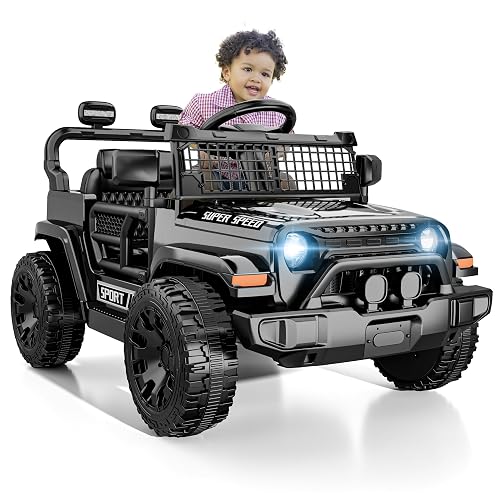
By Emily Parker
Updated November 2026
Ride on toys that go faster than 5mph are usually built for older kids, and the right choice depends on your child’s age, size and experience more than the top speed on the box. This guide shows you how to read speed claims, match a machine to your kid, and spot the safety features that matter once the motor starts pulling harder than a toddler can comfortably handle.
Understand What Top Speed Really Means
Manufacturers usually list top speed as a best-case number, often measured on flat pavement with a fully charged battery and a light rider. Real-world speed on grass, gravel or a slight hill can be noticeably lower. Owners often report that battery age also shaves off speed over a season, so treat the listed number as a ceiling rather than a promise.
Shopping for one? See our guide: 7 Best Powered Ride On Toys Go Karts for Kids (2026).
Match the Speed to Your Child’s Age and Skill
Speed should follow skill, not birthday. Most powered ride-ons above 5mph are rated for kids roughly six and older, but many manufacturers set the age range based on weight limits and seat size as well. A useful rule is to start your child on a model at or below 5mph, let them master steering, braking and stopping distance, and only then move up. Check the official age and weight ratings on the product page, and treat them as minimums for safe handling.
Quick Speed Readiness Checklist
- Your child can reliably stop within a few feet at walking pace.
- They keep both hands on the steering wheel or handlebars without prompting.
- They understand that the vehicle keeps moving briefly after the pedal is released.
- They stay on the ride-on, even when the vehicle turns, and do not stand up while moving.
Check the Safety Features That Matter at Speed
Higher speeds put more load on brakes, tires and the frame, so look past the top-speed number. Key features include a dependable braking system, a seat belt, a secure seat and a parental remote or speed limiter. Many faster models include a remote that lets you stop the vehicle or cap its speed while your child learns. Use a helmet and closed-toe shoes every time, and check the manufacturer’s manual for any additional gear recommendations.
Plan Where and How Your Child Rides
A faster ride-on needs a suitable surface. Flat, smooth, clear areas work best, and a fenced yard or driveway away from traffic is ideal. Keep the route free of toys, pets and steps. Avoid steep slopes unless the manufacturer specifically rates the model for them, and supervise every ride until your child has shown consistent control. If you are unsure whether a particular model suits your situation, a pediatric or product safety professional can help you decide.
Common Mistakes
- Buying the fastest model for a child who is still learning to steer.
- Trusting the top-speed number without considering grass, hills or battery age.
- Ignoring the weight limit, which affects braking and battery performance.
- Letting a child ride without a helmet or proper supervision.
- Skipping regular checks of brakes, tires and battery connections.
Recommended Gear
A parental remote is the most useful upgrade for a faster ride-on, since it lets you stop or limit speed at any moment. View on Amazon
A properly fitted bike-style helmet protects against the falls that are most likely at higher speeds. View on Amazon
FAQ
Are ride on toys over 5mph safe for young kids?
Most faster models are designed for older children, and age and weight ratings should be treated as minimums. Start with a slower model and move up only after your child shows solid control.
Can I reduce the top speed of a faster ride-on?
Some models include a parental remote or speed setting that caps speed, which is the safest way to limit it. Modifying the motor or controller can void the warranty and create serious safety risks, so check with the manufacturer first.
How do I know if the battery is affecting speed?
If the ride-on slows noticeably after a full charge or the battery feels weak, it may be aging. Check the manufacturer’s battery guidance and consider a replacement if performance keeps dropping.
Conclusion
Ride on toys that go faster than 5mph can be great for older kids who have earned the speed. Match the machine to your child’s skill, check the braking and safety features, and supervise closely until control is solid. Speed is fun, but steady control is what keeps the ride enjoyable.
Related reading
- How to Make Ride On Toys Faster: Speed Mods vs Controller Upgrade (2026)
- 3 Best Ride On Toys 5mph for Toddlers and Big Kids (2026)
- Wiggle Ride On Toys: A Dad's Guide to Choosing and Using One Safely
Ready to choose one?
About Emily Parker
Emily Parker is part of our editorial team and reviews and edits our dad-focused parenting guides, checking product details against manufacturer specifications and owner feedback.