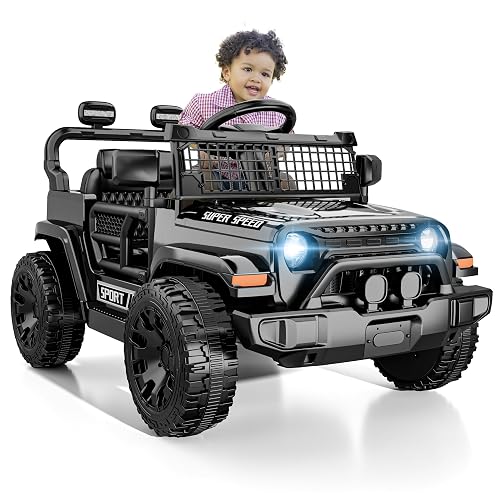
By Emily Parker
Updated November 2026
If you are shopping for john deere ride on toys battery powered, you want to walk away knowing which model fits your toddler, which battery setup you can live with, and what to inspect before the box is even open. This guide covers the checks that matter, in the order I would run them, so you avoid the common regret of a tractor that is too fast, too heavy or too short-lived.
Step 1: Match the Ride-On to Your Child’s Age and Size
Manufacturers publish age ranges and weight limits for a reason. A ride-on that suits a 2-year-old can be a frustrating, unsafe toy for a 5-year-old who wants real speed. Before comparing features, confirm the rated age range and maximum rider weight in the product listing.
Check the seat and leg room
Sit your child in the seat (or measure their inseam). Their feet should reach the pedal or floor comfortably, and their back should fit against the seat without slumping. A seat that is too deep or too tall can make steering awkward and increases the chance of a tip.
Think about the next two years, not just today
Kids grow fast. If your toddler is right at the top of the weight limit now, the toy will be outgrown within months. On the other hand, a model with a much higher limit can feel too fast and powerful for a small child, so aim for the middle of the range when you can.
Step 2: Understand the Battery and Voltage Options
Most john deere ride on toys battery powered models run on a rechargeable battery rated at 6 volts or 12 volts. Voltage is the main driver of power and top speed, so the choice is less about “better” and more about matching the toy to the terrain and rider.
| Feature | 6V system | 12V system |
|---|---|---|
| Typical rider | Younger toddlers | Older toddlers and early elementary kids |
| Top speed (manufacturer-specified range) | Walking pace to a slow jog | Faster, suited to open driveways and yards |
| Hills and grass | Best on flat, smooth surfaces | Handles gentle slopes and uneven ground better |
| Charge time | Usually shorter | Often longer, check the spec sheet |
Always confirm the exact voltage and charge time in the manufacturer specs, since these vary by model. If you are unsure which battery format your toy uses, a Ride on Toys 12 Volt: How to Choose the Right One for Your Toddler (2026) guide walks through the tradeoffs in more detail.
Plan for charging
Batteries are where most ride-ons lose their charm. Check whether the charger is included, whether the battery is sealed or replaceable, and how the manufacturer recommends storing it between uses. Most lead-acid style batteries should be kept charged and not left fully drained for long periods.
Step 3: Check Speed Controls and Parent Override
Speed is the feature that separates a fun toy from a stressful one. Many john deere ride on toys battery powered models offer a forward and reverse setting, a speed limiter, or both. Look for a parent-controlled option if your child is still learning to steer and stop.
Look for a parent remote or lockout
A parent remote lets you stop the toy from a distance, which is valuable on a driveway or near a street. If you are considering one, the Ride On Toys with Parent Remote: 7 Best Picks for Toddlers (2026) roundup covers how these systems compare.
Test the brakes and pedal
Once the toy arrives, have your child sit in it and check that the pedal responds smoothly and that the toy stops when released. A toy that rolls too far after braking is a hazard on any slope.
Step 4: Inspect Safety Features and Small Parts
Ride-ons are heavy, moving toys, so safety checks deserve real attention. Start with the basics: a seat belt or secure harness if the model includes one, sturdy wheels, and no sharp edges on the body or steering wheel.
- Confirm the seat belt latches and releases with one hand.
- Check that decals, horn buttons and small knobs are firmly attached.
- Look for small detachable parts that could pose a choking hazard for younger children.
- Keep batteries and chargers out of reach, and never leave a charging battery unattended.
For a broader view of small parts, magnets and battery safety, read Toddler Toy Safety: Small Parts, Magnets, Button Batteries and Recalls. If you have concerns about a specific product or a recall, check the U.S. Consumer Product Safety Commission website and consult the manufacturer directly.
Step 5: Decide Between the John Deere Tractor Style and Other Options
The John Deere look is popular for good reason: green paint, the familiar tractor shape and a strong fan base among kids who love farm equipment. Still, it helps to compare the styling against function. A tractor-style ride-on often sits higher and has a wider stance than a sports car, which can be an advantage on grass but adds weight.
If your child is drawn to tractors specifically, the Tractor Ride On Toys: 6 Best Picks for Toddlers and Big Kids (2026) comparison is a useful next stop. For a wider selection of models from this brand, see 7 Best John Deere Ride-On Toys for Toddlers and Big Kids (2026).
Step 6: Set Up the Toy and Establish Ground Rules
Once you have chosen a model, the setup takes less than an hour but makes a real difference. Fully charge the battery before first use, read the manual’s charging instructions, and assemble any parts that came loose.
- Charge the battery for the full time listed in the manual before the first ride.
- Tighten all bolts and check wheels and steering.
- Pick a flat, enclosed area for the first few rides.
- Set speed limits if the model allows, and demonstrate braking.
- Agree on simple rules: helmet optional but recommended, no riding near roads, and always an adult nearby.
Recommended gear
A few accessories make battery-powered ride-ons easier to live with, especially for dads who want to keep the toy running all season.
- Replacement or spare battery: A second battery lets you keep riding while the first one charges. Search for compatible options with View on Amazon.
- Smart battery charger: A charger with automatic shutoff reduces the risk of overcharging. Look for one matched to your toy’s voltage with View on Amazon.
- Helmet sized for toddlers: A properly fitted helmet is a simple add-on for any ride-on. Find a child-sized option with View on Amazon.
Common mistakes
- Buying by the age on the box alone, without checking the weight limit and the child’s actual size.
- Choosing the highest voltage “for later” when the child is not ready for that speed.
- Ignoring the charging instructions and damaging the battery through repeated deep discharges.
- Letting a child ride on a steep driveway or near traffic without supervision.
- Skipping the first-day brake test, which is the easiest check to forget.
Tips for getting the most from your ride-on
- Keep a simple charging log so you know when the battery was last topped up.
- Store the toy under cover; moisture and direct sun wear out wiring and paint.
- Rotate in a parent-driven lap around the yard to model safe driving.
- Check bolts and wheels once a month, especially after rough use.
FAQ
Are john deere ride on toys battery powered models safe for toddlers?
They can be, when you choose an age-appropriate model, supervise closely and follow the manufacturer’s weight and speed guidance. Check the seat belt, brakes and any small parts before first use.
How long does a battery last on one charge?
Runtime depends on the model, the rider’s weight, the terrain and how hard the toy is driven. Manufacturers usually give an estimated runtime range; treat it as a guide rather than a guarantee.
Can I use a regular car charger for the battery?
No. Use the charger supplied by the manufacturer or one specifically rated for your battery’s voltage and chemistry. Using the wrong charger can damage the battery or create a fire risk.
What age is a John Deere battery ride-on suitable for?
Age ranges vary by model, so check the rated range on the specific product. Younger toddlers usually need a lower-voltage, slower model with a parent control.
Is a parent remote worth it?
For young or new drivers, many parents find it valuable because it lets them stop the toy quickly. Whether it is worth the added cost depends on your child’s experience and where you plan to ride.
How do I store the toy over winter?
Keep it indoors or under cover, charge the battery according to the manual’s storage guidance, and avoid leaving it fully drained for months. Some batteries benefit from a periodic top-up.
Can older kids use these ride-ons too?
Only if the model’s weight limit and build suit them. Many standard models are designed for younger children, so check ratings carefully before handing the keys to an older sibling.
Conclusion
A john deere ride on toys battery powered model can be a great addition to the yard when the size, voltage and safety features match your child. Work through the checks in order: age and weight, battery and charging, speed controls, and safety inspection. Take the first few rides slowly, and you will have a toy that gets used for seasons rather than sitting in the garage.
Ready to choose one?
About Emily Parker
Emily Parker is part of our editorial team and reviews and edits our dad-focused parenting guides, checking product details against manufacturer specifications and owner feedback.